Source: USDA FoodData Central · Raw · Data verified by CaloriesCalc
60
kcal
per 100g, raw
15.0
g
Carbs
0.82
g
Protein
0.38
g
Fat
1.6
g
Fiber
99
kcal per cup (165g)
135
kcal per mango (225g)
17
kcal per oz (28g)
✔ Rich in vitamin A & C✔ High in antioxidants✔ Supports immunity✔ Fat free✔ Gluten free✔ Vegan
🥭
🥭One of richest sources of vitamin A
🛡Excellent source of vitamin C
❤️Rich in heart-protective polyphenols
🌿Contains mangiferin — unique antioxidant
🧠Supports brain health via B6
🥗Naturally fat free
🥭 Calculate Calories for Any Mango Weight
Weight100g
Nutrition Facts
Per 100g (raw mango)
* % Daily Value based on a 2,000 kcal diet.
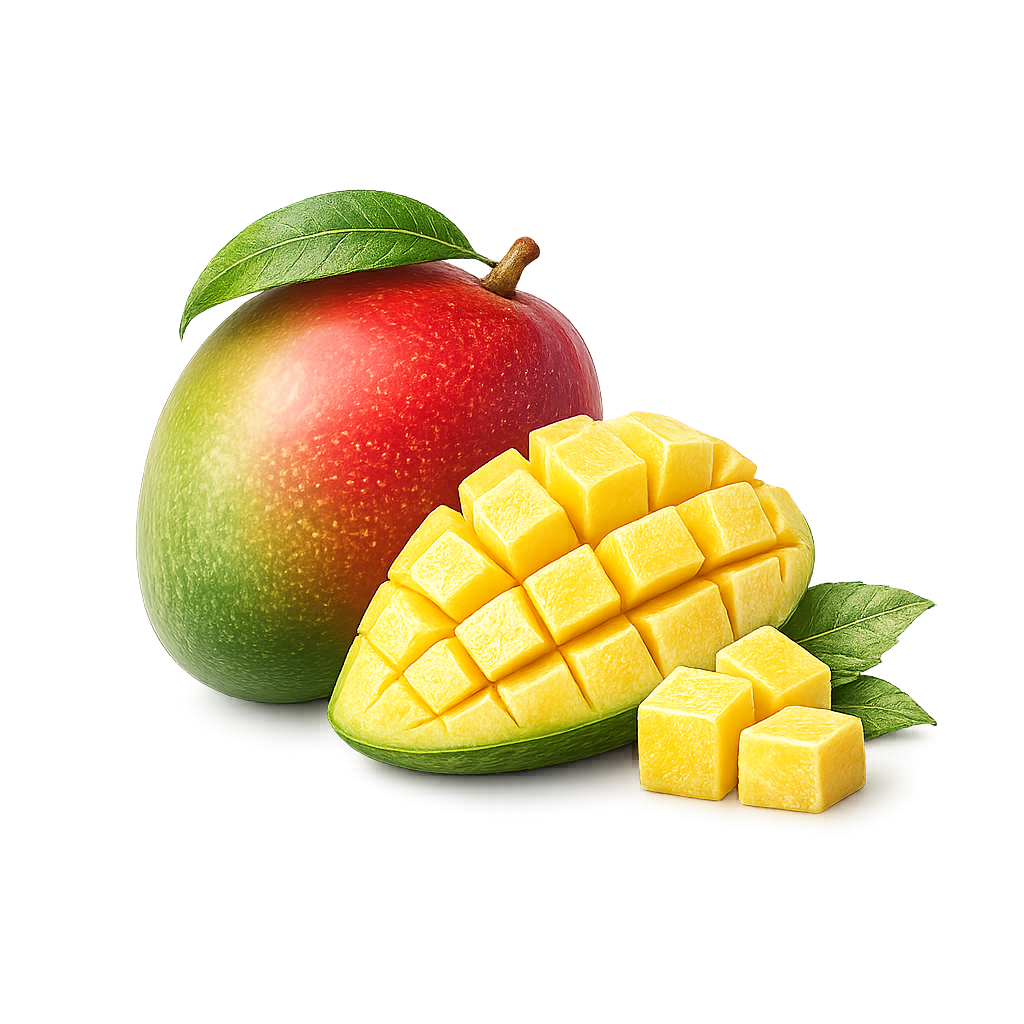
Quick summary: Mango contains 60 calories per 100g and 99 calories per cup. Known as the "King of Fruits", mango provides 40% of daily vitamin C per cup, 11% of vitamin A, significant folate, and the unique antioxidant mangiferin. With a moderate glycemic index of ~51 despite 13.7g of natural sugar per 100g, mango's fiber and organic acids moderate blood sugar impact. It is one of the most nutritionally complete tropical fruits available.
Vitamins & Minerals — per 100g
Nutrient
Amount
% Daily Value
Bar
Vitamin C
36.4 mg
40%
Vitamin A (RAE)
54 µg
6%
Vitamin B6
0.12 mg
7%
Folate (B9)
43 µg
11%
Vitamin K
4.2 µg
4%
Potassium
168 mg
4%
Copper
0.11 mg
12%
Vitamin E
0.9 mg
6%
Magnesium
10 mg
2%
Calcium
11 mg
1%
Calories in Mango by Weight
Weight
Calories
Carbs
Protein
Fat
Calories in Different Mango Servings
Serving
Weight
Calories
Carbs
Net Carbs
Fat
1 slice
33g
20 kcal
5.0g
4.5g
0.5g
1 oz
28g
17 kcal
4.2g
3.8g
0.4g
½ cup diced
83g
50 kcal
12.5g
11.2g
1.3g
⭐ 1 cup diced
165g
99 kcal
24.8g
22.2g
2.6g
1 medium mango
225g
135 kcal
33.8g
30.2g
3.6g
How does mango fit your daily calorie goal?
Calculate your TDEE to see exactly how it fits your daily budget
Mango is 83% water. Its carbs come primarily from natural sugars — fructose, glucose, and sucrose. Despite high sugar content, mango has a moderate glycemic index (~51) due to fiber and organic acids.
Micronutrient Highlights
👁
Vitamin A
54 µg RAE
6% Daily Value
Vision, immune function, skin health
🛡
Vitamin C
36.4 mg
40% Daily Value
Immune support & collagen synthesis
🧠
Vitamin B6
0.12 mg
7% Daily Value
Brain health & neurotransmitter production
🍃
Mangiferin
~1 mg
Unique antioxidant
Anti-inflammatory, anti-diabetic properties
🌿
Fiber
1.6 g
6% Daily Value
Digestive health & satiety
⚡
Potassium
168 mg
4% Daily Value
Blood pressure & heart function
Mango Health Benefits & Nutrition
Vitamin C — 40% of Daily Value per Cup
A cup of mango provides 60mg of vitamin C — 40% of the recommended daily intake of 90mg. This makes mango one of the best tropical fruit sources of vitamin C, surpassed among common fruits only by citrus and strawberries. Vitamin C is essential for collagen synthesis, immune defence, iron absorption from plant foods, and antioxidant protection.
Mangiferin — the Unique Mango Compound
Mango contains mangiferin — a polyphenol found in very few other foods. Clinical studies have shown mangiferin has anti-inflammatory, anti-diabetic, and neuroprotective effects in animal and cell models. Human studies are preliminary but promising, particularly for blood sugar regulation and reducing inflammatory markers. Mangiferin is concentrated in the pulp and skin of ripe mangoes.
Vitamin A and Beta-Carotene
Mango is one of the richest fruit sources of beta-carotene — the precursor to vitamin A. The deep yellow-orange colour of mango flesh directly reflects its carotenoid content. Vitamin A supports night vision, immune function, skin integrity, and reproductive health. Unlike vitamin A from animal sources, beta-carotene from fruit is converted by the body only as needed, preventing toxicity.
Glycemic Index and Blood Sugar
Despite containing 13.7g of natural sugar per 100g, mango has a moderate glycemic index of approximately 51 — similar to orange or banana. The fiber, organic acids, and polyphenols in mango slow sugar absorption significantly. A 2021 randomised trial found that eating whole mango did not worsen blood sugar control in overweight adults, and actually reduced inflammatory markers.
Mango contains 60 calories per 100g. A cup of diced mango (165g) has 99 calories. A medium whole mango (225g) has about 135 calories. Use the slider above to calculate for any weight.
Is mango good for weight loss?
In moderation. Mango is higher in sugar than most fruits (13.7g/100g) and moderately caloric at 60 kcal/100g. A cup (99 calories) is nutritious but should be accounted for in daily calorie targets. Its high vitamin content and fiber make it more nutritious than typical sweet snacks of similar calorie count.
How much vitamin C is in mango?
A cup of mango (165g) provides approximately 60mg of vitamin C — about 67% of the adult daily requirement. Per 100g, mango contains 36.4mg — significantly more than apples (4.6mg) or bananas (8.7mg), though less than oranges (53.2mg) or strawberries (58.8mg).
Is mango keto?
No. Mango has approximately 13.4g of net carbs per 100g and a moderate glycemic index. It's not suitable for ketogenic diets. Even a small 50g serving provides 6.7g of net carbs.
Is mango high in sugar?
Yes — mango contains 13.7g of natural sugars per 100g, making it one of the sweeter common fruits. However these are naturally occurring fructose, glucose, and sucrose accompanied by fiber, vitamins, and polyphenols that moderate their metabolic impact compared to refined sugars.
What is the best time to eat mango?
Mango is most beneficial eaten as part of a meal or with protein/fat to slow sugar absorption, rather than alone as a fasted snack. Consuming it after exercise is ideal — the natural sugars replenish muscle glycogen while vitamins C and A support recovery. Avoid eating large quantities in the evening when insulin sensitivity is lower.