Source: USDA FoodData Central · Raw · Data verified by CaloriesCalc
39
kcal
per 100g, raw
9.54
g
Carbs
0.91
g
Protein
0.25
g
Fat
1.5
g
Fiber
59
kcal per medium peach (150g)
66
kcal per large peach (175g)
11
kcal per oz (28g)
✔ Very low calorie✔ Rich in beta-carotene✔ Good source of potassium✔ Fat free✔ Gluten free✔ Vegan
🍑
🍑Very low calorie — just 39 kcal per 100g
👁Rich in beta-carotene (vitamin A precursor)
⚡Good source of potassium — 190mg per 100g
💧89% water — very hydrating
🌿Anti-inflammatory polyphenols
😌Low glycemic index — 42
🍑 Calculate Calories for Any Peach Weight
Weight100g
Nutrition Facts
Per 100g (raw peach)
* % Daily Value based on a 2,000 kcal diet.
Quick summary: Peaches contain just 39 calories per 100g — one of the lowest among fleshy fruits. A medium peach (150g) provides 59 calories, 4% of daily potassium, 7% of vitamin C, and significant beta-carotene. With 89% water content, a low GI of ~42, and only 8.0g of net carbs per 100g, peaches are excellent for weight management and blood sugar control.
Vitamins & Minerals — per 100g
Nutrient
Amount
% Daily Value
Bar
Vitamin C
6.6 mg
7%
Potassium
190 mg
4%
Niacin (B3)
0.81 mg
5%
Vitamin E
0.73 mg
5%
Vitamin A (RAE)
16 µg
2%
Folate (B9)
4 µg
1%
Magnesium
9 mg
2%
Phosphorus
20 mg
2%
Vitamin K
2.6 µg
2%
Copper
0.07 mg
8%
Calories in Peach by Weight
Weight
Calories
Carbs
Protein
Fat
Calories in Different Peach Servings
Serving
Weight
Calories
Carbs
Net Carbs
Fat
1 small peach
130g
51 kcal
12.4g
10.4g
0.3g
⭐ 1 medium peach
150g
59 kcal
14.3g
12.0g
0.4g
1 large peach
175g
68 kcal
16.7g
14.1g
0.4g
1 cup sliced
154g
60 kcal
14.7g
12.4g
0.4g
1 oz
28g
11 kcal
2.7g
2.2g
0.1g
How does peach fit your daily calorie goal?
Calculate your TDEE to see exactly how it fits your daily budget
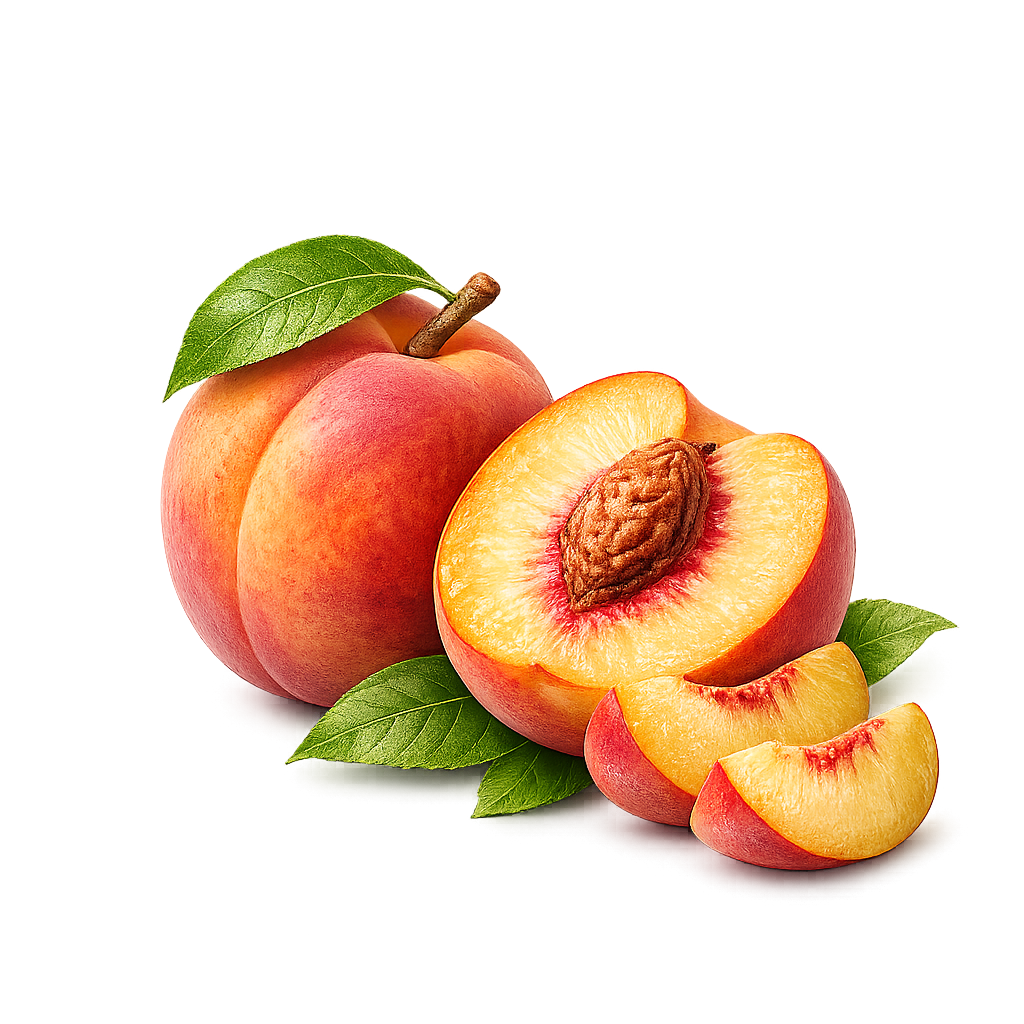
Peaches are 89% water — among the most water-rich fruits. Net carbs are 8.0g per 100g. The golden-yellow flesh colour indicates beta-carotene content.
Micronutrient Highlights
👁
Beta-carotene
162 µg
Vitamin A precursor
Vision, immune function, and skin health
⚡
Potassium
190 mg
4% Daily Value
Blood pressure and heart function
🛡
Vitamin C
6.6 mg
7% Daily Value
Immune support and collagen
🌿
Fiber
1.5 g
5% Daily Value
Digestive health
🔬
Niacin (B3)
0.81 mg
5% Daily Value
Energy metabolism
🧠
Vitamin E
0.73 mg
5% Daily Value
Antioxidant protection
Peach Health Benefits & Nutrition
Beta-Carotene and Vitamin A
Peaches' golden-yellow to orange flesh colour comes from beta-carotene — a carotenoid that the body converts to vitamin A as needed. Vitamin A supports night vision, maintains the integrity of skin and mucous membranes, and is essential for immune function. Yellow-fleshed peaches contain significantly more beta-carotene than white-fleshed varieties. Unlike vitamin A from animal sources, beta-carotene from fruit cannot cause toxicity as conversion is regulated by the body.
Gut Health and the Microbiome
Peaches contain both soluble and insoluble fiber, as well as prebiotic compounds including sorbitol and chlorogenic acid. Research has found that peach polyphenols — particularly chlorogenic acid — selectively promote growth of beneficial Bifidobacterium and Lactobacillus species while inhibiting pathogenic bacteria. These microbiome effects may explain some of the anti-inflammatory and metabolic benefits associated with regular peach consumption.
Skin Benefits
Dietary peach consumption provides vitamin C (collagen synthesis), vitamin E (antioxidant protection), beta-carotene (photoprotection), and polyphenols (anti-inflammatory effects). A 2020 study found that women who consumed peach extract daily for 8 weeks showed significant improvements in skin hydration and elasticity compared to placebo.
Weight Loss and Satiety
At 39 kcal per 100g with 89% water content, peaches are one of the lowest-calorie fleshy fruits available. A medium peach provides only 59 calories while delivering meaningful fiber, sweetness, and volume. Research on fruits with high water and fiber content consistently shows they reduce overall calorie intake at meals by creating gastric volume and triggering satiety hormones earlier.
Peaches contain 39 calories per 100g. A medium peach (150g) has 59 calories. A large peach (175g) has 68 calories. Use the slider above to calculate for any weight.
Is peach good for weight loss?
Yes — peaches are excellent for weight loss. At just 39 kcal per 100g and 89% water content, they are among the lowest-calorie sweet fruits. A whole medium peach is only 59 calories and provides meaningful fiber, sweetness, and hydration.
Are peaches high in sugar?
Moderately. Peaches contain 8.4g of natural sugar per 100g — lower than grapes (15.5g), mango (13.7g), or cherries (12.8g). Their low GI (~42) means blood sugar rises slowly despite the sugar content.
Is peach keto?
Not for strict keto. Peaches have 8.0g of net carbs per 100g. A medium peach (150g) provides 12g of net carbs.
What is the difference between white and yellow peaches?
Yellow peaches have golden-orange flesh with more acidic flavour and higher beta-carotene. White peaches are sweeter, less acidic, and lower in beta-carotene. Calorically they are nearly identical (~39 kcal/100g).
Can you eat peach skin?
Yes — peach skin is edible and nutritious, containing additional fiber, antioxidants, and vitamins. Wash thoroughly and eat with skin when possible for maximum nutritional benefit.