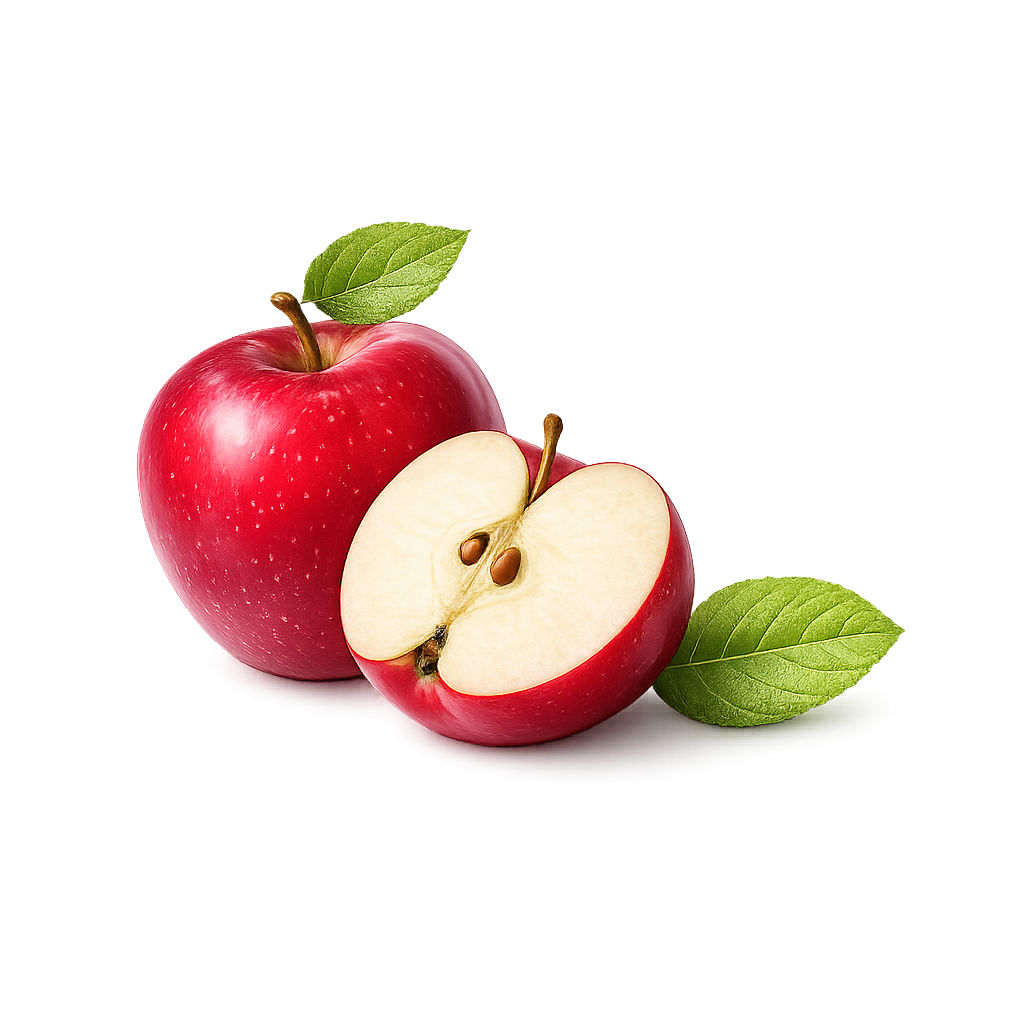
🍎 A medium apple (182g) contains approximately 95 kcal, 25g carbs and 4g fibre. Raw apple with skin provides 52 kcal per 100g — making it one of the lower-calorie fruits available.
Source: USDA FoodData Central · Raw, With Skin · Data verified by CaloriesCalc
52
kcal
per 100g, raw, with skin
13.8
g
Carbs
0.3
g
Protein
0.2
g
Fat
2.4
g
Fiber
77
kcal small (149g)
95
kcal medium (182g)
116
kcal large (223g)
✔ Low calorie✔ High in fiber✔ Rich in antioxidants✔ Fat free✔ Gluten free✔ Vegan
🍎
🍃Rich in antioxidants
🌾High in fiber
❤️Supports heart health
⚖️Excellent for weight loss
🥗Naturally fat free
🩸Low glycemic index — 36
🍎 Calculate Calories for Any Apple Weight
Weight100g
Nutrition Facts
Per 100g (raw apple with skin)
* % Daily Value based on a 2,000 kcal diet.
Quick summary: Apples contain just 52 calories per 100g — one of the lowest among common fruits. A medium apple provides 95 calories, 4.4g of fiber, and significant antioxidants including quercetin and catechin. With 86% water content and virtually no fat, apples are among the best fruits for weight management and are backed by research linking regular consumption to reduced risk of heart disease, type 2 diabetes, and certain cancers.
Vitamins & Minerals — per 100g
Nutrient
Amount
% Daily Value
Bar
Vitamin C
4.6 mg
5%
Potassium
107 mg
2%
Vitamin K
2.2 µg
2%
Vitamin B6
0.04 mg
2%
Manganese
0.04 mg
2%
Copper
0.03 mg
3%
Folate (B9)
3 µg
1%
Magnesium
5 mg
1%
Phosphorus
11 mg
1%
Calcium
6 mg
1%
Calories in Apple by Weight
Weight
Calories
Carbs
Protein
Fat
Calories in Different Apple Sizes
Size
Weight
Calories
Carbs
Protein
Fat
Small (2¾")
149g
77 kcal
21g
0.4g
0.2g
⭐ Medium (3")
182g
95 kcal
25g
0.5g
0.3g
Large (3¼")
223g
116 kcal
31g
0.6g
0.4g
1 cup sliced
125g
65 kcal
17g
0.3g
0.2g
1 cup chopped
125g
65 kcal
17g
0.3g
0.2g
Half medium apple
91g
47 kcal
13g
0.2g
0.1g
How does an apple fit your daily calorie goal?
Calculate your TDEE to see exactly how apples fit your daily budget
Apples are almost entirely carbohydrates and water (86% water content). The carbs come primarily from natural fructose and fiber — the skin contains a significant portion of the fiber and antioxidants.
Micronutrient Highlights
🛡
Vitamin C
4.6 mg
5% Daily Value
Supports immune system & skin health
🌿
Fiber
2.4 g
9% Daily Value
Feeds gut bacteria & promotes satiety
🍃
Quercetin
~4 mg
Antioxidant
Anti-inflammatory, heart-protective
⚡
Potassium
107 mg
2% Daily Value
Supports heart & muscle function
🦴
Vitamin K
2.2 µg
2% Daily Value
Essential for blood clotting & bone health
💧
Water
86%
High hydration
Contributes to daily hydration needs
Apple Health Benefits & Nutrition
Is Apple Good for Weight Loss?
Apples are one of the best fruits for weight loss. At only 52 kcal per 100g with 86% water content and 2.4g of fiber, they create strong satiety per calorie consumed. Research published in the journal Appetite found that eating a whole apple before a meal reduced calorie intake at that meal by 15% compared to apple juice or applesauce — because the fiber and cell structure slow digestion in a way juice cannot replicate.
"An Apple a Day" — What the Research Actually Shows
Multiple large epidemiological studies have linked regular apple consumption (1+ per day) with reduced risk of type 2 diabetes (26% lower risk in one Harvard study), cardiovascular disease, and lung cancer. The mechanism is primarily attributed to quercetin, catechin, and chlorogenic acid — polyphenols concentrated in and just beneath the skin. Always eat the skin for maximum benefit.
Glycemic Index and Blood Sugar
Apples have a low glycemic index of approximately 36 — significantly lower than most fruits. The combination of fructose, fiber, and polyphenols slows sugar absorption. This makes apples one of the safest fruits for blood sugar management and a common recommendation for people with insulin resistance or type 2 diabetes.
Gut Health and the Microbiome
Apples are rich in pectin — a soluble fiber that acts as a prebiotic, feeding beneficial gut bacteria. One medium apple provides approximately 1.2g of pectin. Evidence suggests regular pectin intake increases populations of Bifidobacterium and Lactobacillus — bacteria associated with improved immune function and reduced inflammation.
A medium apple (182g) contains 95 calories. Per 100g, apples have 52 calories. A small apple (149g) has 77 kcal and a large apple (223g) has 116 kcal. Use the slider above to calculate calories for any weight.
Is apple good for weight loss?
Yes — apples are one of the best fruits for weight loss. At 52 kcal per 100g with high fiber (2.4g) and water content (86%), they are very filling per calorie. Research suggests eating a whole apple before a meal reduces total calorie intake at that meal by up to 15%.
Should I eat the apple skin?
Yes. The skin contains the majority of the apple's fiber, antioxidants (quercetin, catechin), and vitamins. Peeling an apple removes approximately 25–30% of its nutritional value. Always wash thoroughly before eating with skin.
Is apple keto?
No. A medium apple contains approximately 23g of net carbs, which would exceed most keto daily carb limits of 20–50g. Small portions (¼ apple) might fit into a less strict low-carb diet.
Can diabetics eat apples?
Yes, in moderate portions. Apples have a low glycemic index of approximately 36 — meaning they cause a slow, gradual rise in blood sugar. Multiple studies associate regular apple consumption with reduced risk of type 2 diabetes. One medium apple per day is generally considered safe for most diabetics.
How many calories in apple juice?
Apple juice contains approximately 46 kcal per 100ml — similar to a whole apple per 100g. However, juice removes virtually all fiber, causing much faster blood sugar spikes. A 250ml glass of apple juice has ~115 calories with almost no satiety benefit compared to eating a whole apple.
Are green apples lower in calories than red apples?
The calorie difference between varieties is minimal — typically within 5 kcal per 100g. Granny Smith (green) averages 58 kcal/100g, Gala and Fuji (red) average 52–55 kcal/100g. The more meaningful difference is sugar content: green apples tend to have less sugar and slightly more fiber than red varieties.